AND WHAT WE CAN DO ABOUT ITWHEN LANDSCAPES DRY OUT
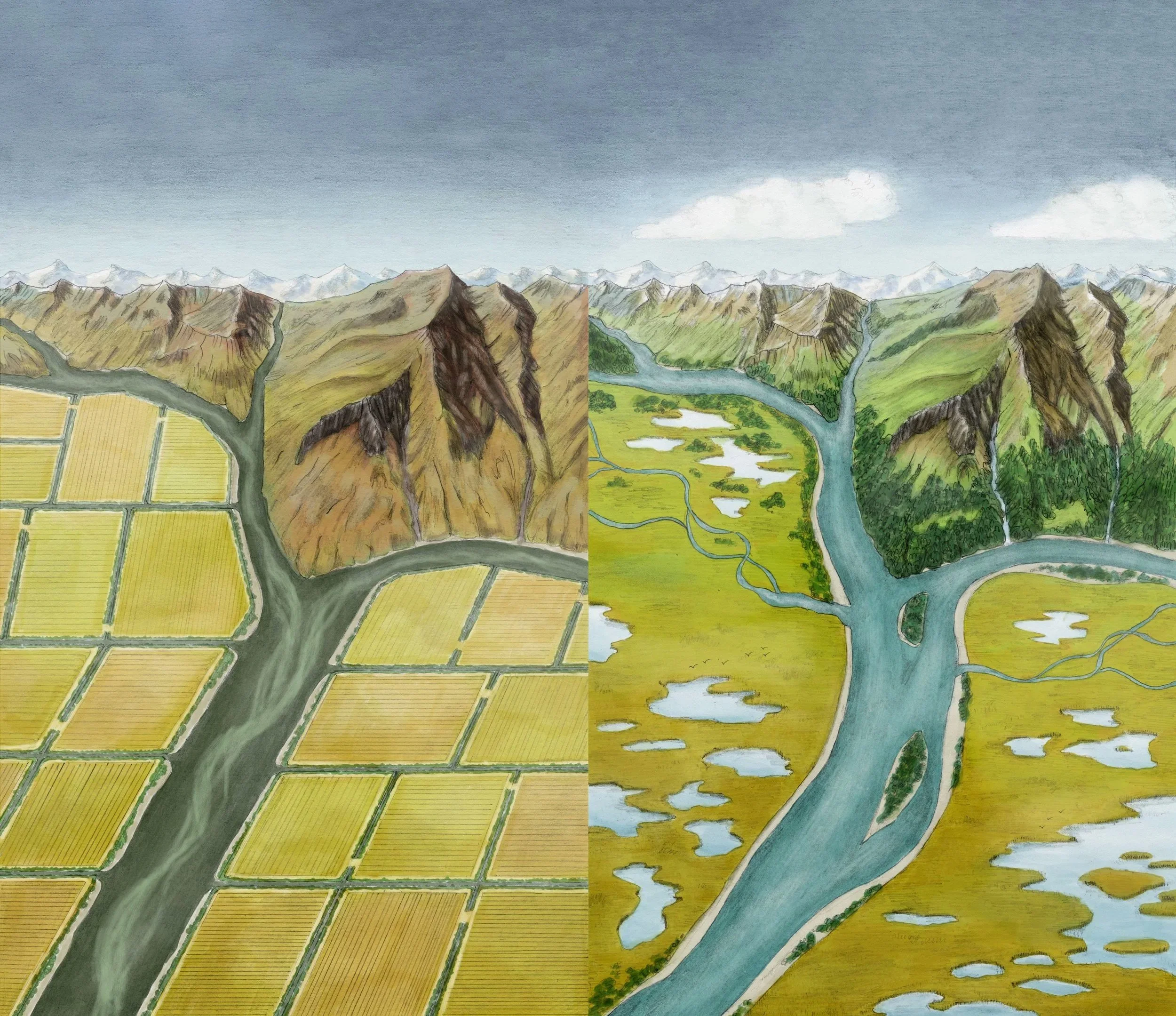
We have designed landscapes to move water away very efficiently. In a hotter, more water-stressed world, we need to restore some of the storage capacity we have lost.
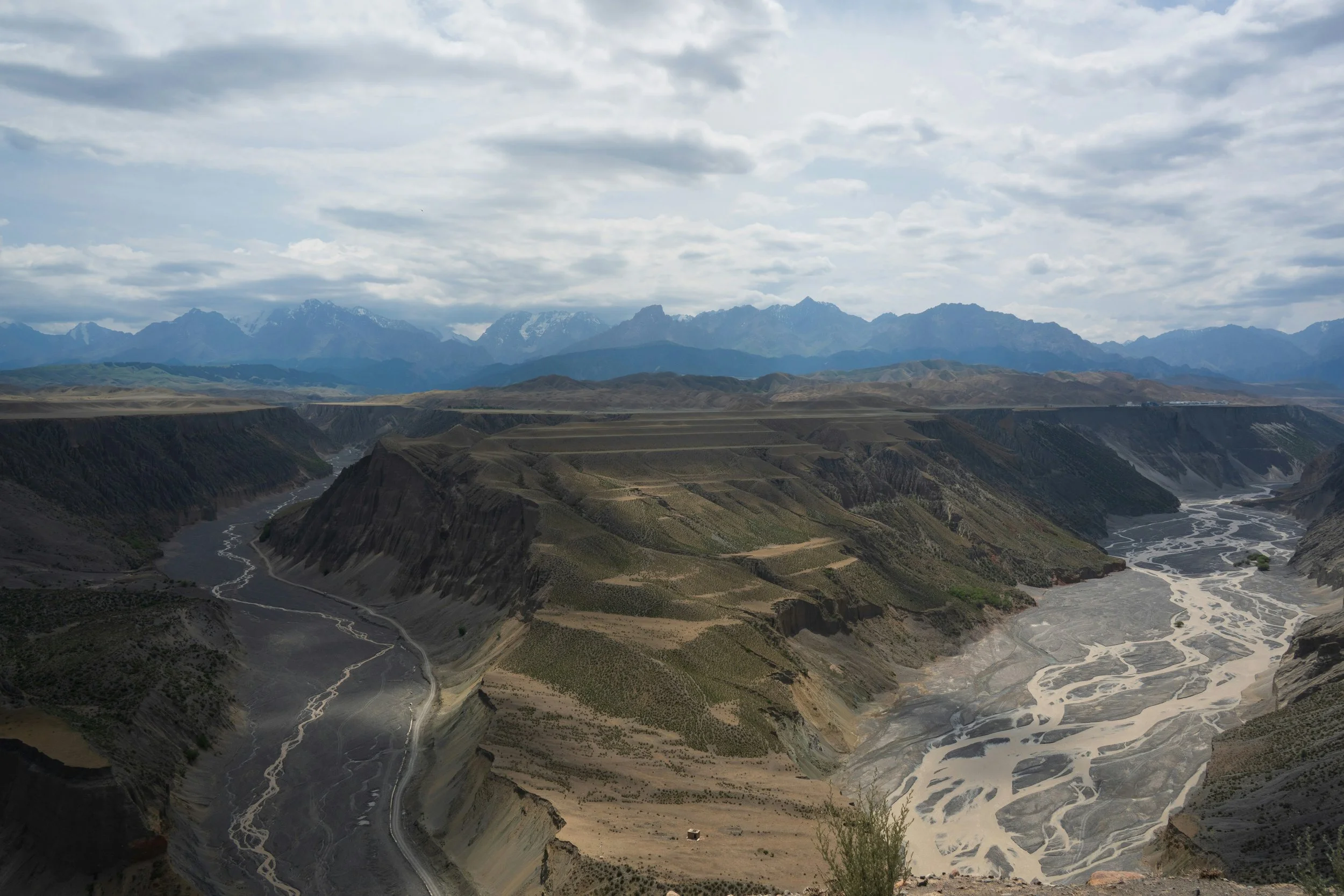
Across the world, rivers are running exceptionally low.
Heatwaves, prolonged drought and wildfires are putting pressure on ecosystems, agriculture, energy production and communities.
But a dry river is not only a story about what happens in the river. It is also a story about what happens upstream, across the whole landscape.
For thousands of years, humans have been reshaping landscapes to make them more productive, accessible and easier to inhabit.
We drained wetlands to create farmland, straightened rivers, disconnected floodplains, cleared forests, compacted soils and built channels to move water where we wanted it to go. Rainwater was increasingly directed into drains, ditches and rivers, helping us make landscapes more usable and protect settlements from excess water.
Much of this made sense at the time. Drainage helped create farmland, protect homes and infrastructure, and make difficult landscapes easier to live and work in.
But circumstances have changed.
With hotter temperatures, longer dry periods and more intense rainfall, we are beginning to see the limits of landscapes designed to move water away as quickly as possible.
The question is how much water we can afford to send away today. Perhaps now it is time to restore some of what we have lost.
HOW WE MANAGE LANDSCAPES DETERMINES HOW MUCH WATER STAYS IN THEM
The problem isn't just that we're running out of water. It's that we're not keeping water in the landscape.
A landscape can receive plenty of rain and still end up with no water in summer.
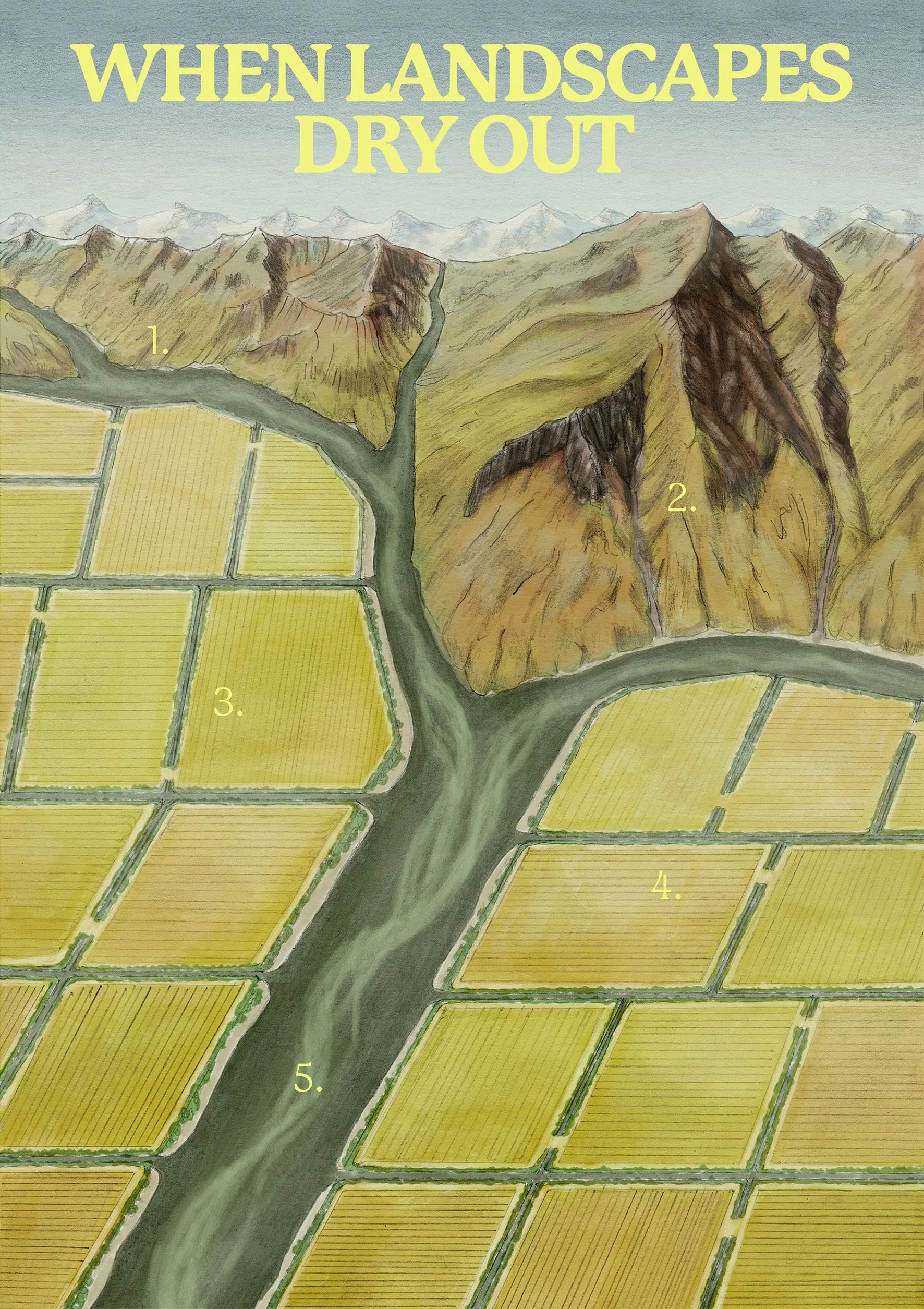
① Compacted and exposed soil with no vegetation
② Runoff carries water rapidly into drainage systems
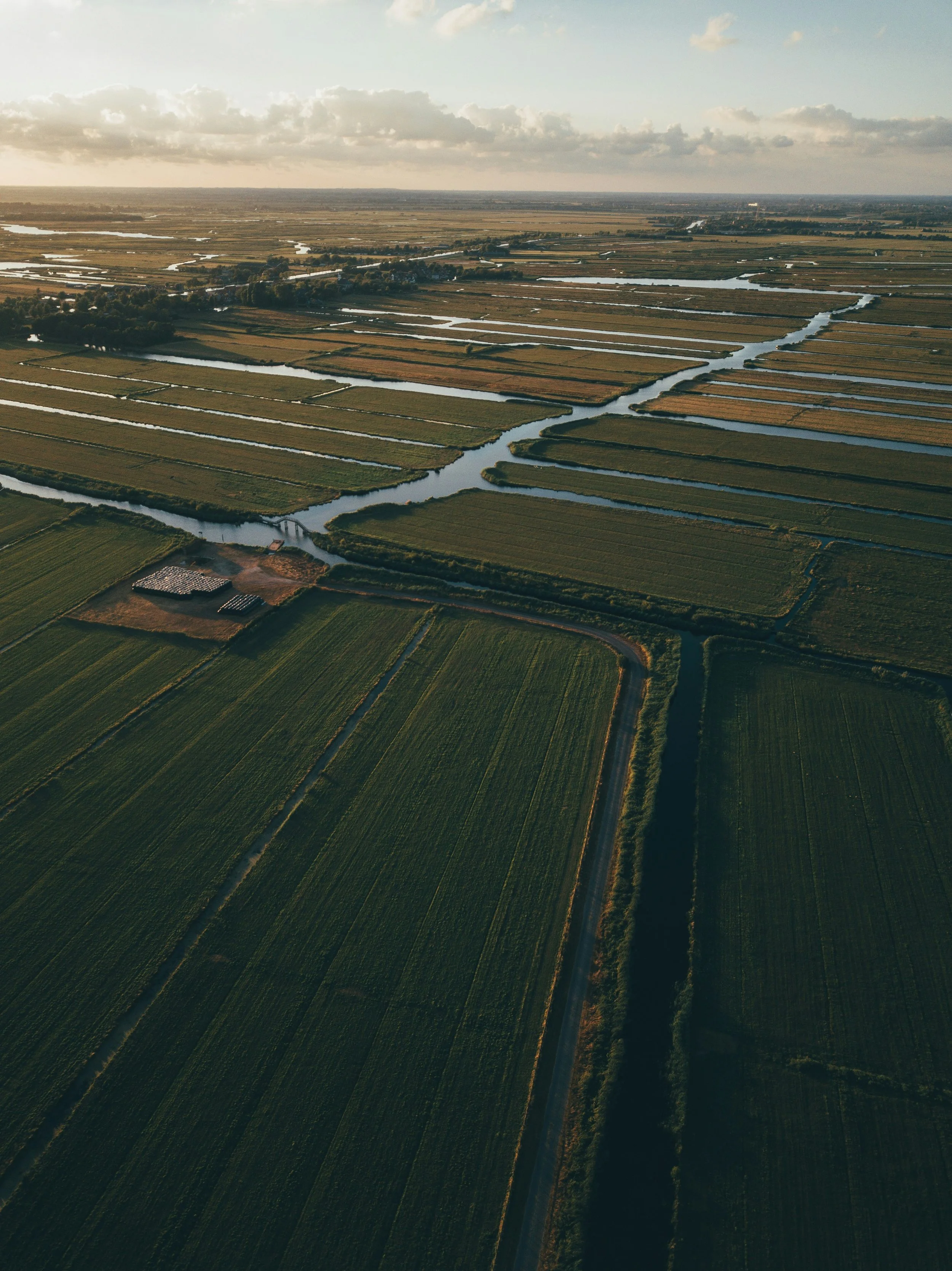
③ Drainage ditches move excess water away quickly
④ Drained wetlands remove natural storage areas
⑤ Straightened streams move water downstream faster
MOVING WATER AWAY
The way we manage water often makes it move too quickly. Instead of being stored in the landscape, it is carried away.
Drainage can be useful and has an important role in many landscapes. Farms need workable soils. Roads and buildings need protection from excess water. People need to live and produce food. The question is where we really need to remove water and where we could allow the landscape to hold more of it.
Because when too much water is removed too quickly, we lose part of the landscape's ability to store it.
In many places, we don't need to choose between productive land and water-retentive land. We can design for both.
The water isn't gone. It just leaves too quickly.
WHEN THE LANDSCAPE STORES LESS WATER, WE ALL FEEL THE CONSEQUENCES. IT IS NOT JUST AN ENVIRONMENTAL ISSUE.
Agriculture has less water available during dry periods, which causes crop stress and lower yields.
Ecosystems with less flow and warmer water will put aquatic life under stress.
Hotter and drier landscapes become more fire-prone.
Low river flows and high water temperatures can constrain hydropower and cooling of some power plants.
Low rivers can restrict shipping and increase transport costs and food prices.
Less reliable water availability means greater pressure on water supplies for communities.
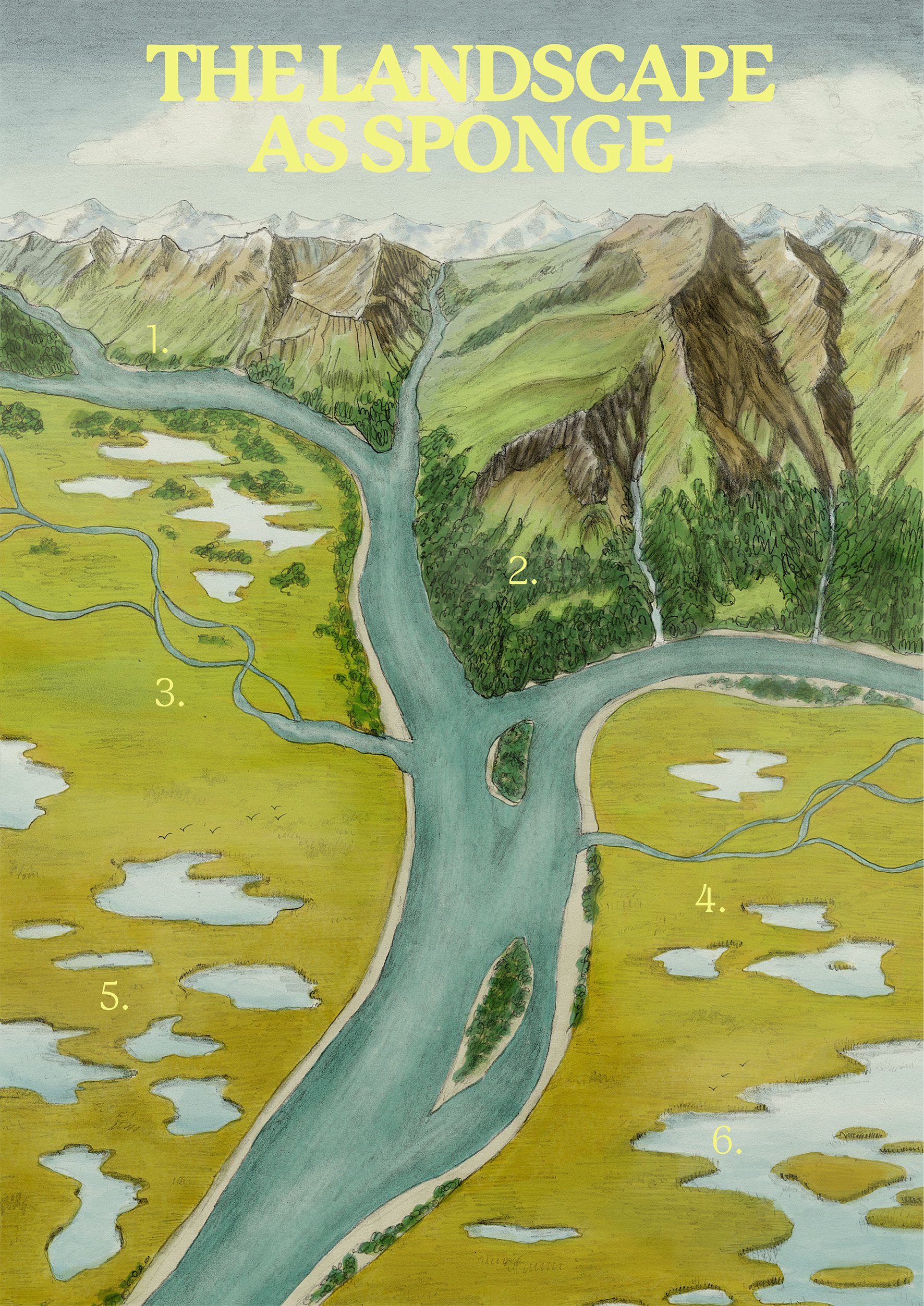
① Healthy soils store water where it falls
② Vegetation protects soil and slows runoff
③ Meandering streams slow the flow of water through the landscape
④ Floodplains give rivers room to spread
⑤ Wetlands store water and releases it slowly
⑥ Groundwater is stored below the surface
FROM DRAINAGE TO RETENTION
Instead of moving water away as quickly as possible, we can design landscapes to slow it down, spread it out and let it sink into the ground.
A water-retentive landscape works like a sponge. It slows water down, gives it space to spread, and allows more water to soak into the ground and be stored in the landscape.
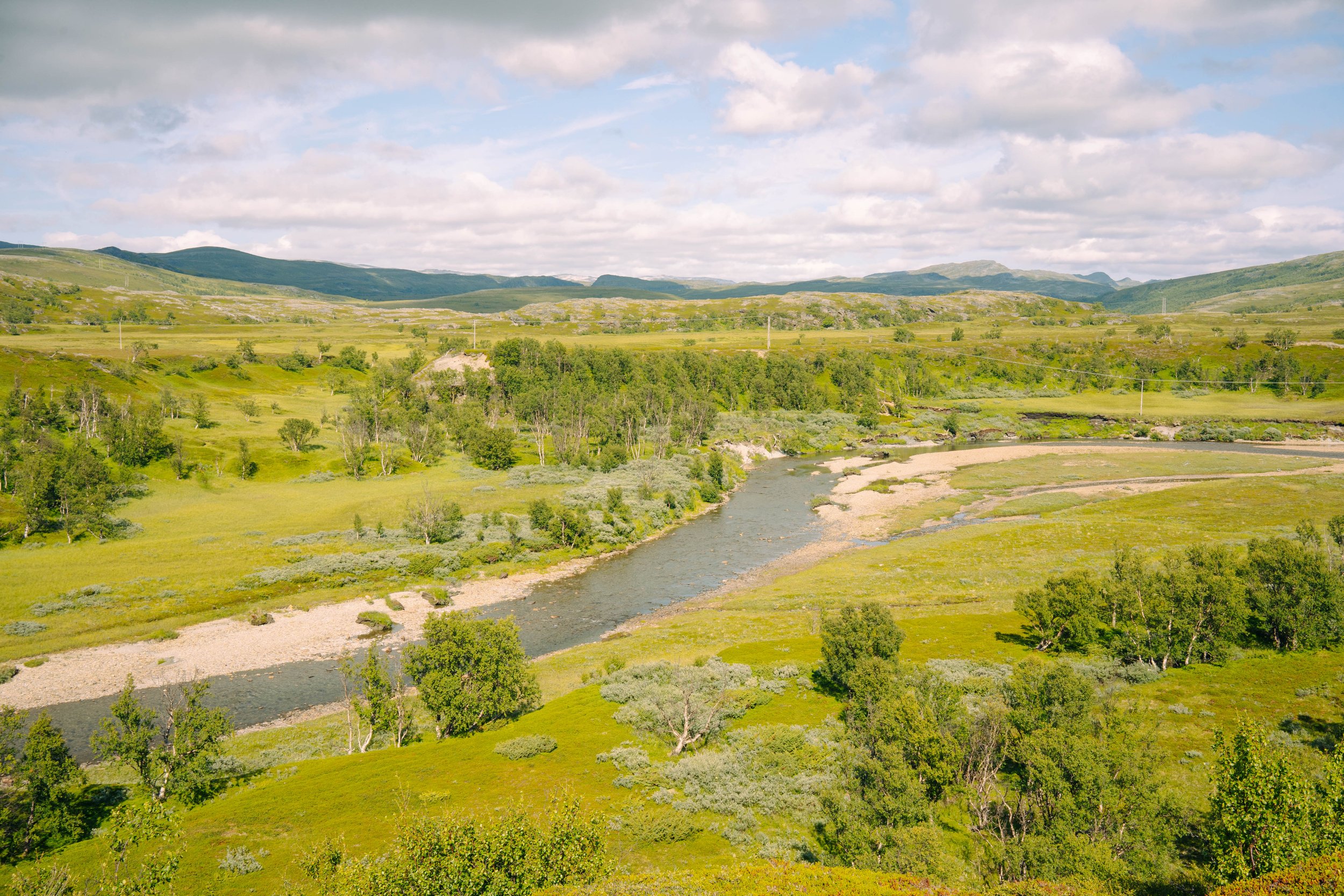
Healthy soils, vegetation, wetlands, ponds and floodplains can hold water in the landscape and release it gradually, helping landscapes stay cooler, greener and more resilient through dry periods.
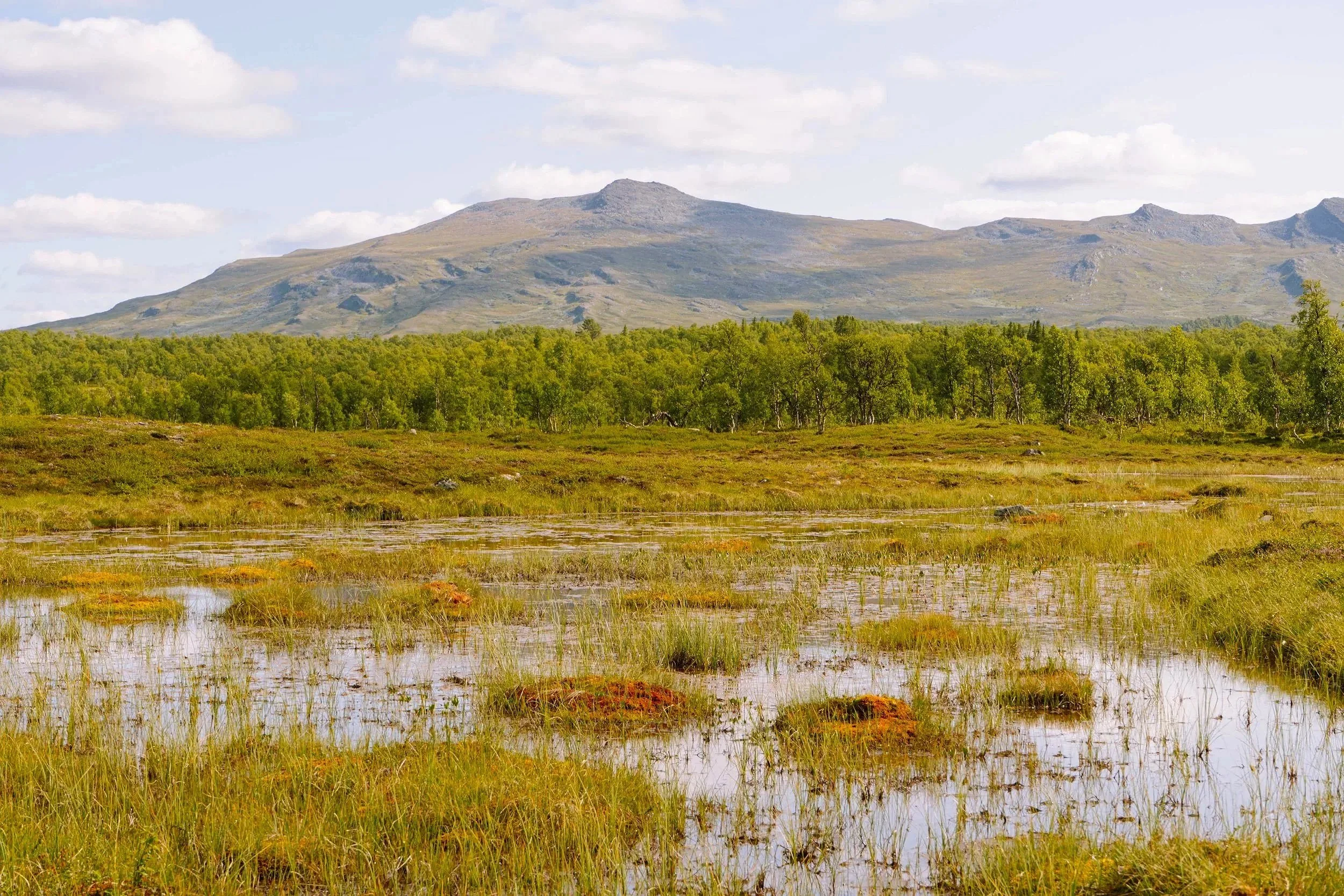
Wetlands, healthy soils, floodplains and vegetated landscapes can store water, slow its movement and release it gradually.
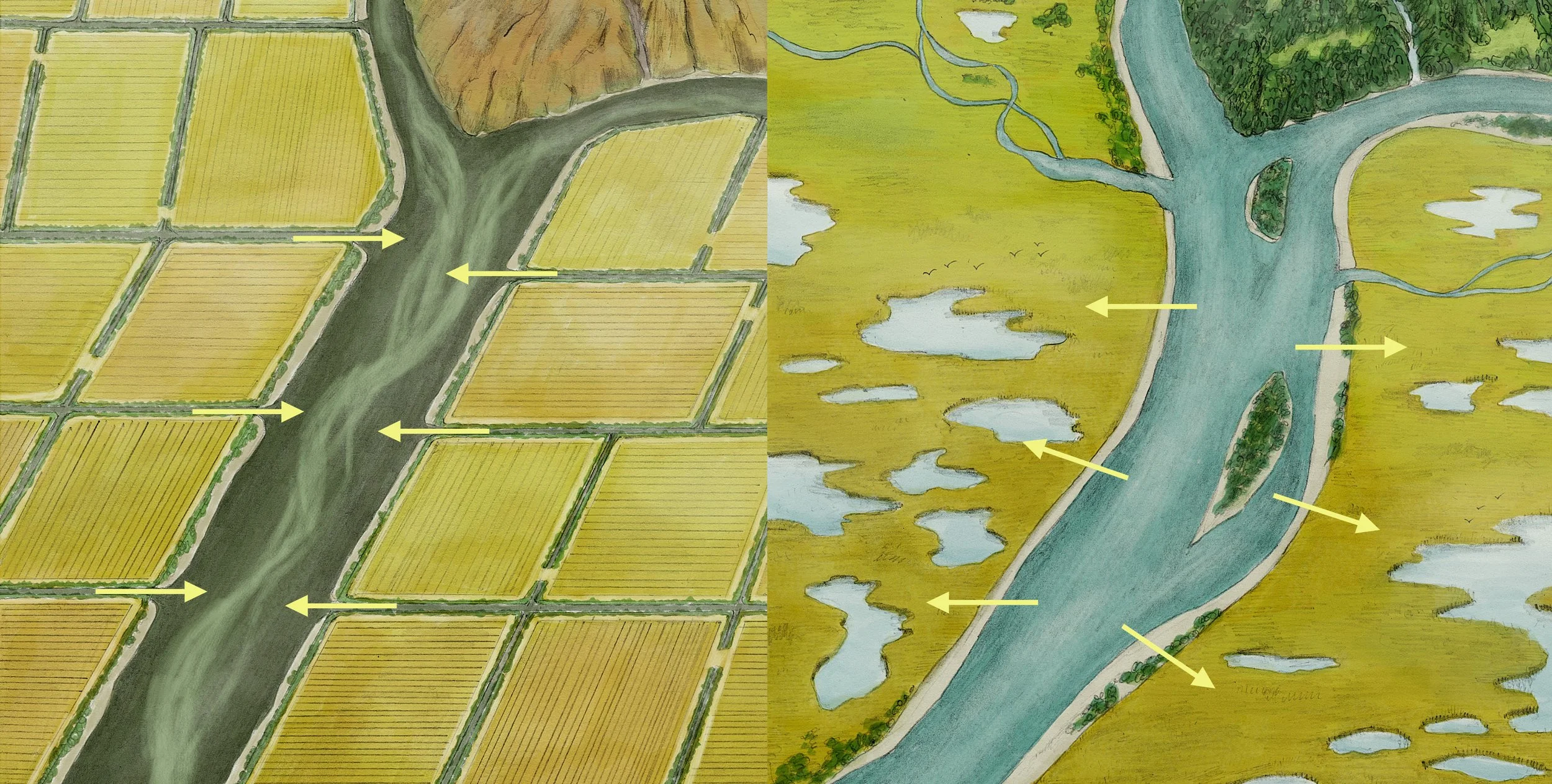
Instead of being quickly directed out of the landscape, water can be stored within it, like in a sponge.
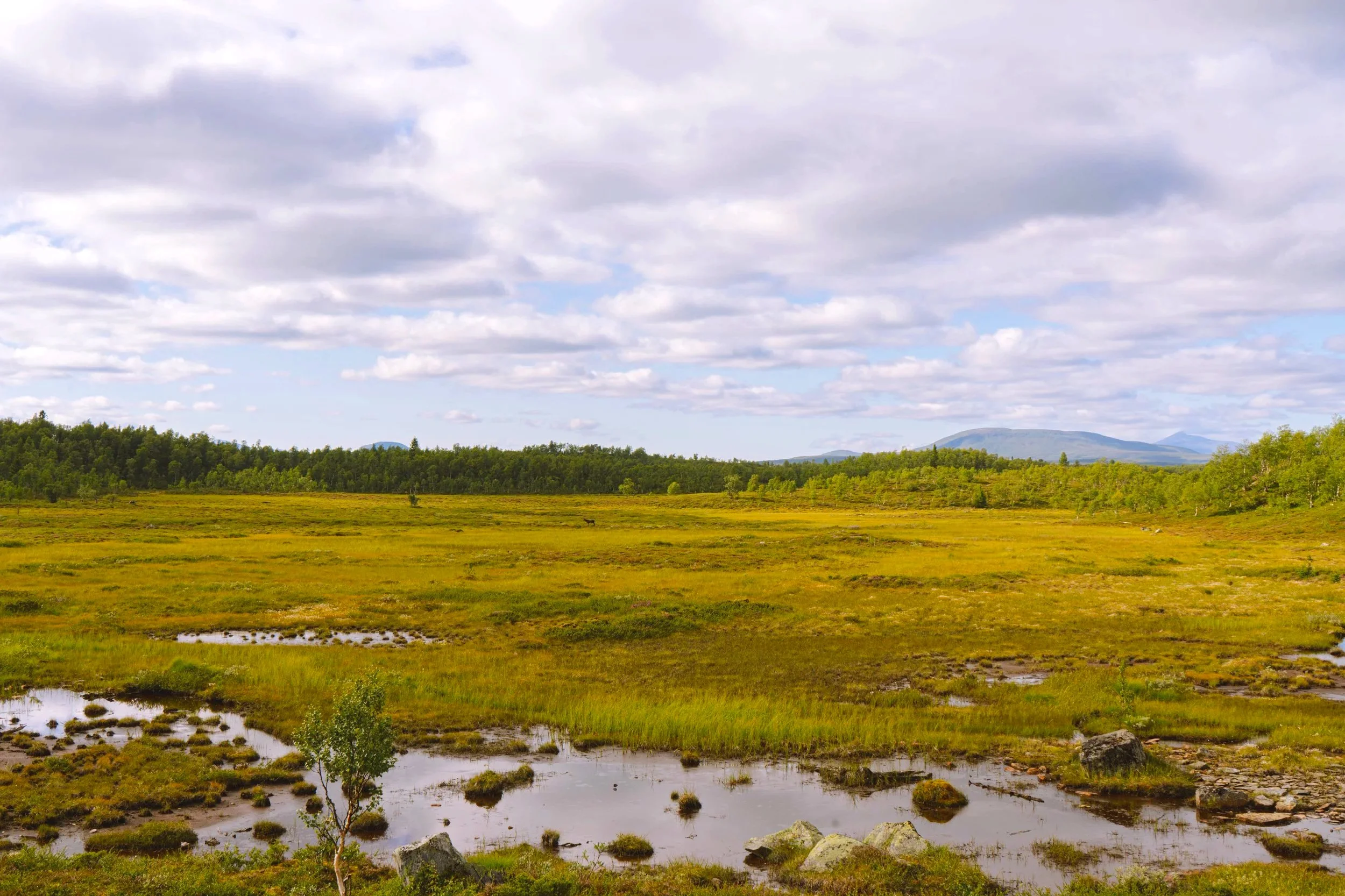
Keep rain where it falls
Bring water back to the land
On a small scale
❋ Collect rainwater from roofs
❋ Create infiltration areas, e.g. a Raingarden
❋ Slow down runoff
❋ Build soil organic matter
❋ Create ponds / wetlands where appropriate
❋ Keep soil covered
❋ Plant vegetation
On a larger scale
❋ Restore degraded landscapes
❋ Restore wetlands
❋ Reconnect floodplains
❋ Redesign drainage
❋ Build water-retentive landscapes
Every garden, farm and piece of land can become part of the solution. What works depends on the landscape, its soils, climate, topography and how the land is used.