
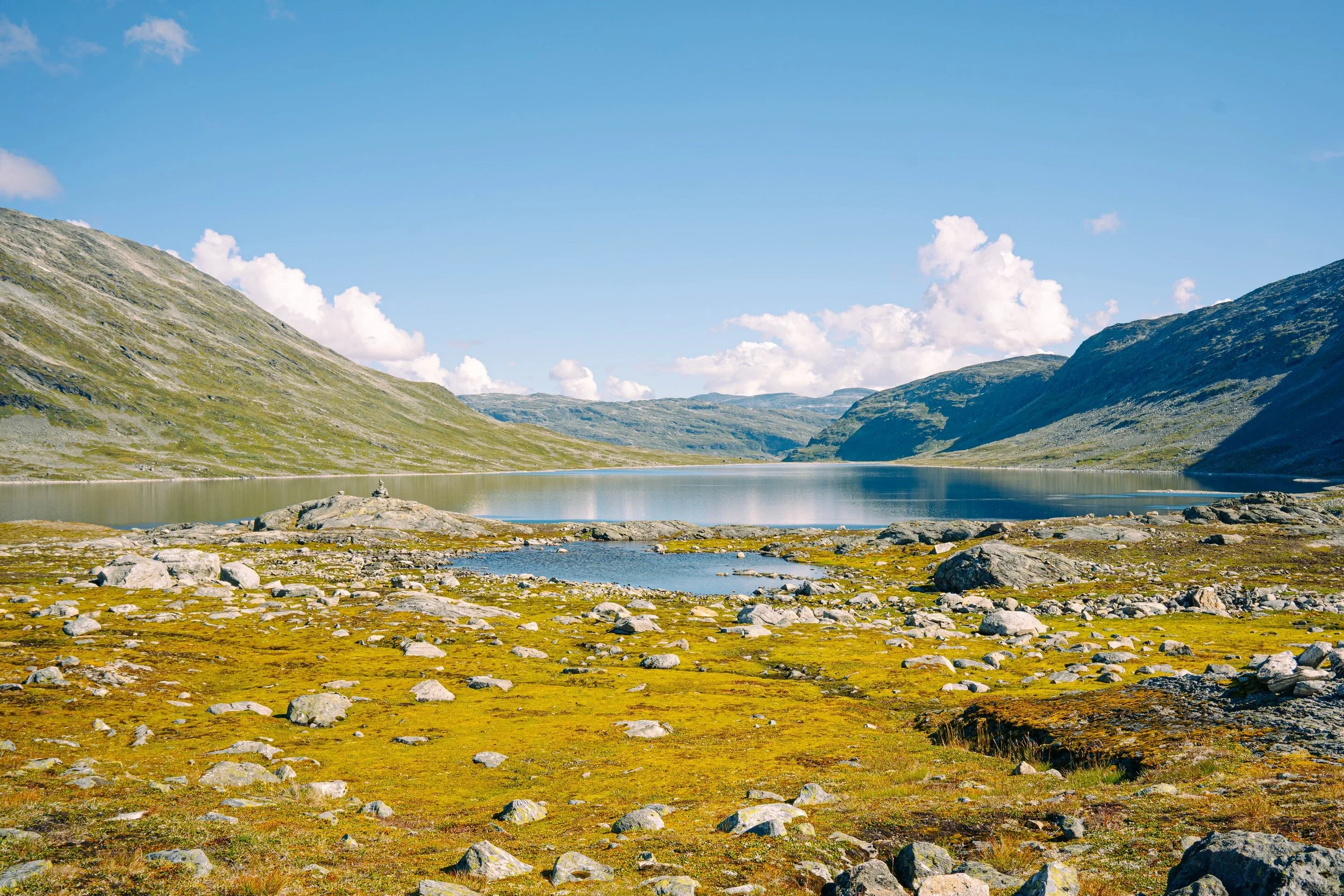
GET CONTROL, PEACE, STABILITY AND BELONGING By restoring nature on your land with water
WORK TOGETHER

POSSIBLE OUTCOMES
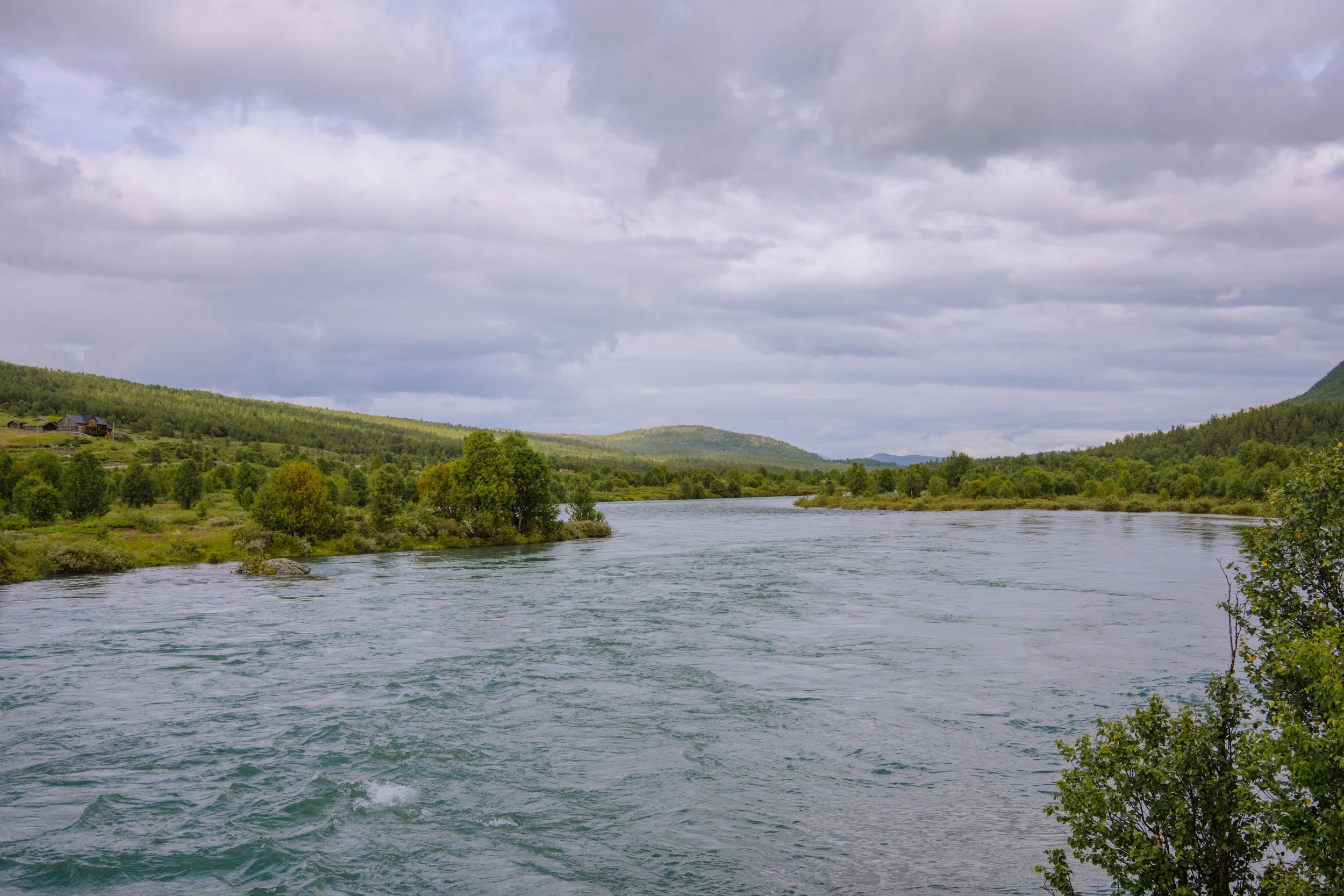
My Approach
Practical water solutions that do more than protect: they regenerate life.
Water is redirected from problematic areas into places where it can infiltrate safely and become productive. The same intervention stabilizes infrastructure, restores microclimates, increases vegetation and wildlife, and supports groundwater recharge. From one water movement to multiple long-term benefits.
Water is guided away from damage and into regeneration. The result is healthier land, revived water cycles, and landscapes that become more alive over time.
How problems, turned into ecological solutions, could look like
❋ ROADS
Problem:
Rainwater runoff damages the road.
Solution:
Water is redirected into shallow landscape basins where it infiltrates slowly, cools the area, and feeds vegetation.
Added value:
Stable infrastructure, cooler microclimates, more plants and insects, higher groundwater recharge
❋ ROOFS
Problem:
Roof runoff is wasted and causes damage to the house.
Solution:
Roof runoff is guided into planted infiltration areas and seasonal water features.
Added value:
Lively gardens, cooler surroundings, healthier soil, visible water cycle.
❋ SLOPES
Problem:
Heavy rain washes away soil and erosion happens.
Solution:
Water is slowed, spread, and absorbed through land-shaping and vegetation.
Added value:
Erosion stopped, stable soil, improved water availability for plants and animals.
❋ FIELDS
Problem:
Rainwater runs off fields quickly, soils dry out, and crops become increasingly dependent on irrigation.
Solution:
Water is slowed, spread, and retained across fields so it can infiltrate into soil and root zones.
Added value:
Higher soil moisture, more stable yields, reduced irrigation demand, healthier soils
Redirecting water so it serves both nature and your goals.
RISK → SAFETY
DEPENDENCE → RESILIENCE
CONTROL → COOPERATION WITH NATURE
FEAR → CALMNESS
EFFORT → FLOW
Your benefits by restoring your land with water
Water is once again becoming the defining element of landscape, safety, and life.
CONTROL
In times of extreme weather and uncertainty, Water Retention Landscapes gives you back your power to act.
PEACE
No constant worries about drought, flooding, crop failure, or fire. Mental relief through fewer decisions, less crisis mode, less “firefighting.” You regain your quality of life.
VALUE & STABILITY
What is created does not lose value, it gains significance, function, and sustainability.
BELONGING & MEANING
The feeling of being part of life and nature again. You leave behind a place that is better than before for future generations.
Restore Earth's beauty; renew our bond with land, each other, and future generations
GROUNDWATER RECHARGE ►︎ FIRE/ FLOOD AND DROUGHT PROTECTION ►︎ SOIL IMPROVEMENT ►︎ BIODIVERSITY
Benefits for your land
Fire
Dry landscapes and fragmented vegetation increase fire risk.
Solution:
Water is retained in soils and vegetation structures that stay green longer and act as natural fire buffers.
Added value:
Reduced fire intensity, safer buffer zones, healthier ecosystems, and landscapes that recover faster after fire events.
Drought
Land dries out quickly, vegetation weakens, and water disappears after rainfall.
Solution:
Rainfall is slowed, spread, and retained in the landscape so it can infiltrate and stay available longer.
Added value:
Moister soils, stronger vegetation, cooler microclimates, and increased resilience during dry periods.
Floods
Heavy rainfall causes erosion, flooding, and damage to infrastructure.
Solution:
Water is diverted to infiltration and retention areas that absorb peak runoff and slowly release the water.
Added value:
Less flooding, stabilized soils, replenished groundwater, and landscapes that can better cope with extreme precipitation.
Low Groundwater
Groundwater levels drop as rainwater leaves the land too quickly.
Solution:
Surface water is guided into infiltration zones that feed deeper soil layers and groundwater systems.
Added value:
Rising groundwater levels, healthier vegetation, and improved long-term water availability.
AVAILABLE FOR FLEXIBLE CONSULTATIONS IN SOUTH PORTUGAL AT THE MOMENT
My Services
Every collaboration begins with an in-depth land assessment and reading of the site. From there, we co-define the most effective interventions, guided by the land itself and focused on long-term ecological and functional value.
I support projects from in-depth land reading through design and implementation guidance on site.
I am in an early stage of building my implementation portfolio. While my expertise lies in land reading and water-based design, I currently deepen my practical experience through guided projects and collaboration on site.
-
A Land Reading is the foundation of every successful intervention. Through careful observation and site analysis, I read the landscape’s natural patterns: water flow, soil, vegetation, and topography. This process reveals where water wants to move, stay, or infiltrate, and what the land truly needs to regain balance and resilience.
-
Water Retention Landscapes are designed to slow, spread, and store water within the land. Based on the insights from the land reading, tailored measures such as ponds, terraces, or contour-based earthworks are implemented to restore the water cycle, increase soil vitality, and strengthen ecosystems over the long term.
-
Preventing water damage starts with understanding how water moves through the landscape. By guiding, slowing, and retaining water at the right locations, destructive runoff, flooding, and infrastructure damage can be significantly reduced while turning excess water into a valuable resource.
-
Wetland restoration reconnects land and water systems. By reactivating natural floodplains and wet areas, wetlands can once again filter water, store carbon, support wildlife, and buffer extreme weather events such as droughts and floods.
-
Erosion prevention works by stabilizing soils and restoring natural flow patterns. Through contour-based design, vegetation, and targeted earthworks, soil loss is minimized, slopes are strengthened, and the land regains its capacity to hold water and nutrients.
-
Wildlife ponds are designed to support biodiversity and natural water balance. Shallow zones, varied edges, and seasonal dynamics create vital habitats for amphibians, insects, birds, and plants while enhancing water retention within the landscape.
-
Infiltration basins are designed to capture surface water and allow it to slowly soak into the soil. By recharging groundwater and reducing runoff, they help stabilize the local water cycle, support vegetation, and lower the risk of flooding and erosion, all guided by the natural conditions of the land.
-
Rain gardens are planted depressions that capture and infiltrate rainwater close to where it falls. By slowing runoff and filtering water naturally through soil and vegetation, they reduce flooding risks, support groundwater recharge, and create valuable and beautiful habitats, seamlessly integrating water management into the landscape.
-
Terraces are designed to slow water, stabilize slopes, and build fertile soil over time. By working along contour lines, they reduce erosion, increase infiltration, and create resilient growing spaces, always shaped by the natural structure and needs of the land.
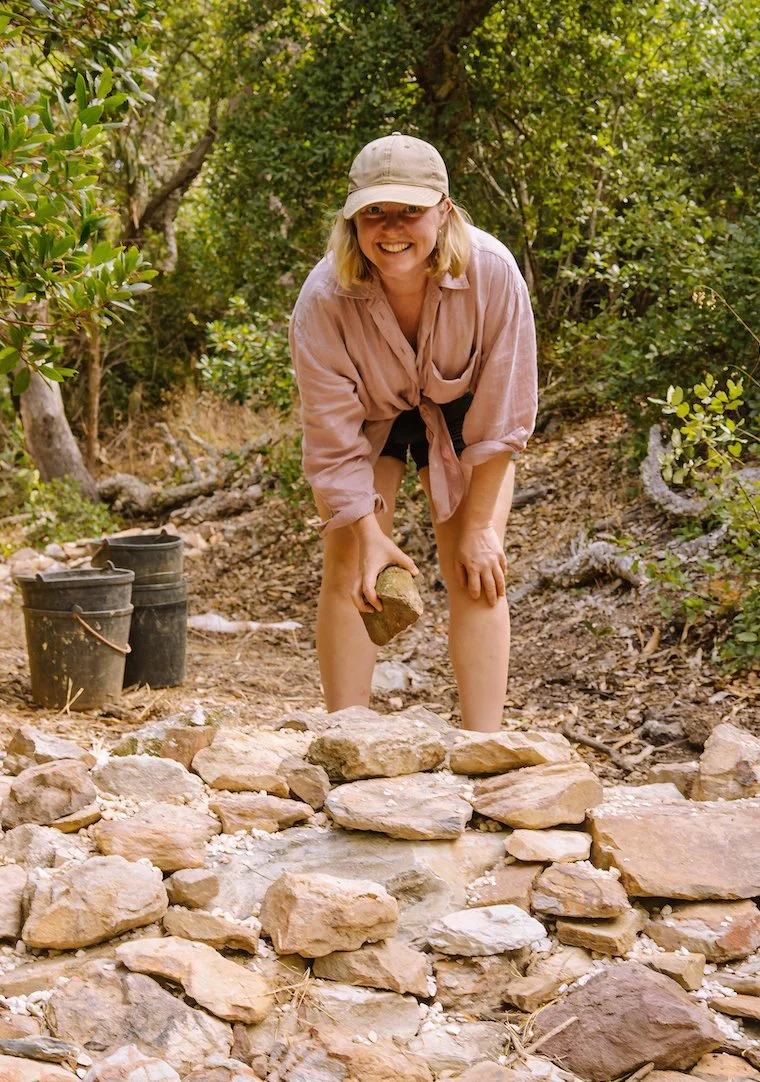
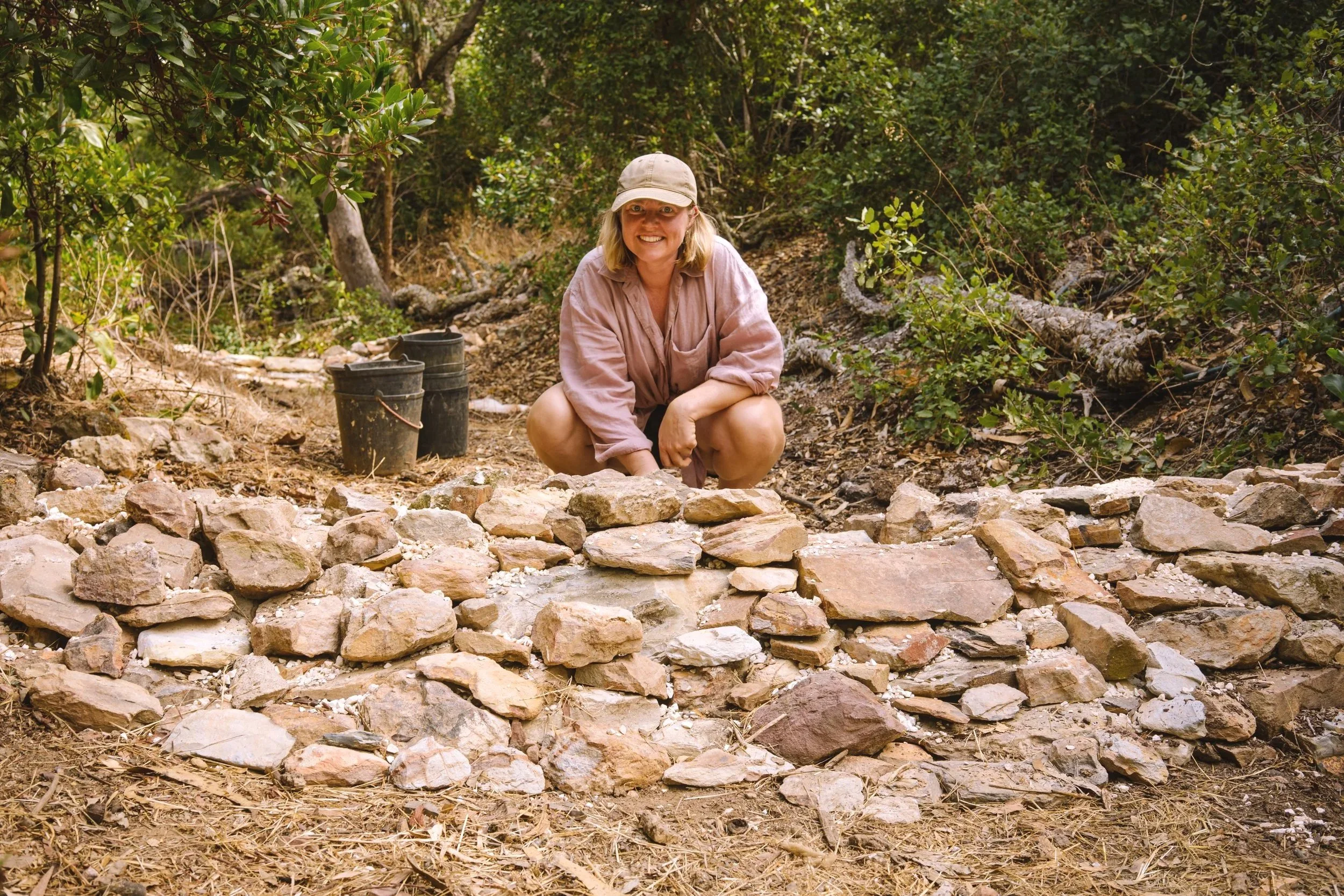
Meet me
Artist, who became passionate about restoring ecosystems with water
PROCESS: FIRST MESSAGE ►︎ FILL OUT FORM ►︎ ONLINE CALL ►︎ VISIT ON SIDE